
When planning a move, one of the first decisions you may face is choosing who to hire. Search online for moving services and you will encounter two very different types of businesses: moving companies and moving brokers. They may appear similar at first because both can help you arrange a move, discuss pricing, and connect you with transportation services. However, their roles are fundamentally different.
A moving company is typically the business that actually performs the physical move. Its employees or contracted crews may load your belongings, transport them, unload them, and sometimes provide additional services such as packing, furniture disassembly, storage, and unpacking. A moving broker, on the other hand, generally arranges moving services by connecting customers with moving companies. The broker may handle the initial sales process and estimate, but another company ultimately performs the physical work.
This distinction matters because the company you communicate with when you book your move may not be the company that arrives at your home on moving day.
Understanding who is responsible for your belongings, who sets the final price, who handles complaints, and who you should contact when something goes wrong can help you make a better decision. It can also reduce the possibility of unpleasant surprises involving pricing, scheduling, services, or communication.
Neither option is automatically right or wrong for every move. A reputable broker can help customers find available movers, particularly when schedules are complicated or when someone needs assistance comparing options. A reputable moving company can provide a more direct relationship because the company selling the service is also responsible for carrying it out.
The important issue is transparency.
Before paying a deposit or signing a moving agreement, you should know exactly who you are hiring, what services they provide, what the estimate covers, and whether another company will actually perform the move.
This guide explains the difference between moving companies and moving brokers, how each works, what advantages and disadvantages they offer, what questions you should ask, and how to protect yourself when comparing moving services.
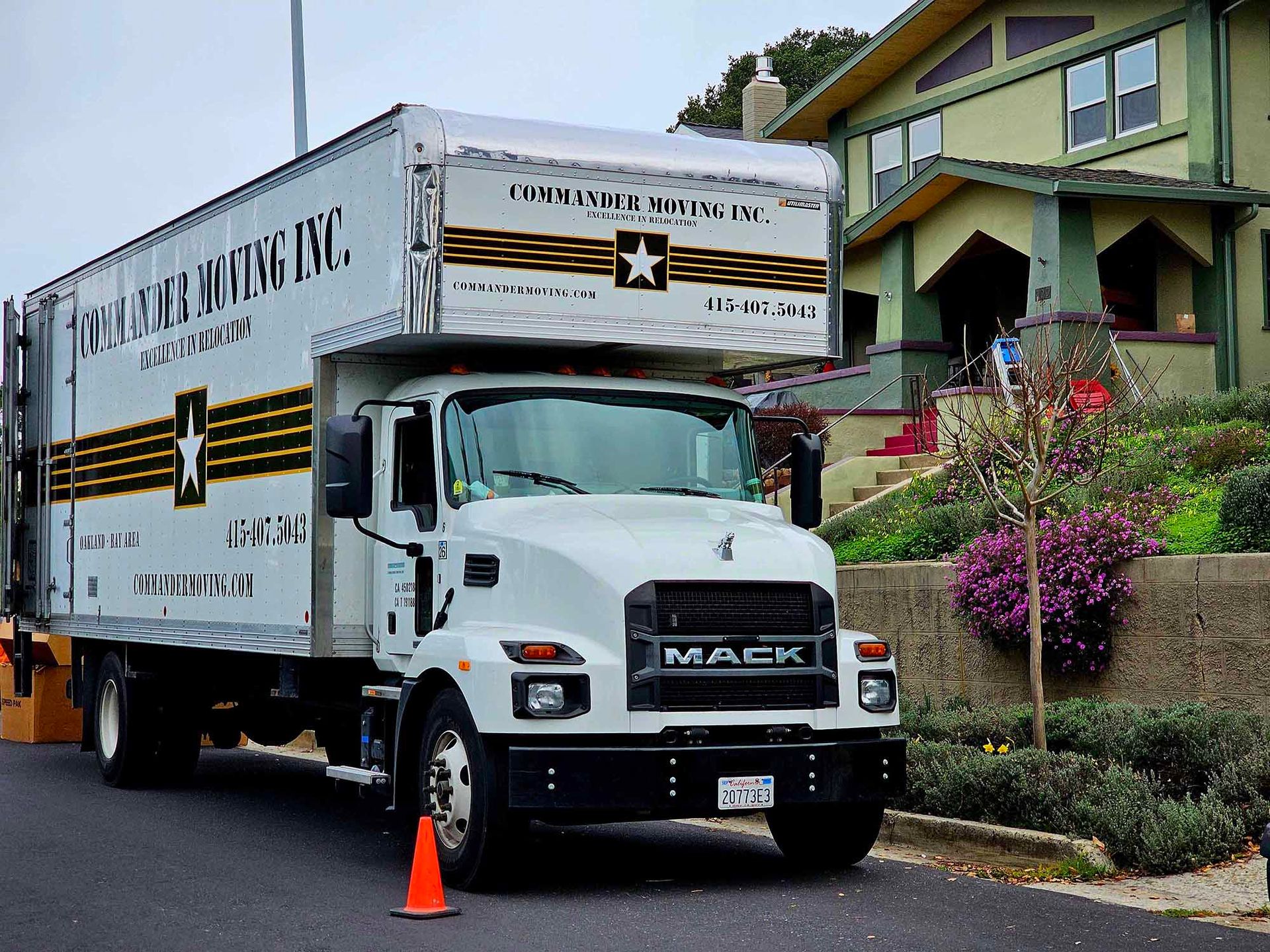
A moving broker generally does not perform the physical move.
Instead, the broker acts as an intermediary between customers and moving companies.
The broker may collect information about your move, discuss your requirements, provide an estimated price, and then arrange for a moving company to perform the actual transportation.
A broker may help with several parts of the planning process.
For example, a broker may:
The broker’s role is primarily organizational and sales-related rather than physical.
Moving can involve a lot of research.
Instead of contacting several moving companies individually, a customer may prefer to give their information to a broker and have the broker identify potential movers.
This can be convenient for people who are unfamiliar with the moving industry or who are dealing with a complicated relocation.
However, convenience comes with an important responsibility: understanding exactly which company will perform the move.
The simplest distinction is this:
That difference affects several aspects of the customer experience.
When you hire a moving company directly, the company you contact is generally the company you expect to handle the physical work.
When you work with a broker, the broker may handle the initial booking while a separate moving company performs the actual transportation.
This can affect:
Understanding this relationship before you book is essential.
When you hire a moving company directly, the process is generally straightforward.
You provide information about your move, including your current location, destination, moving date, household size, and services needed.
The company may conduct an in-person or virtual survey of your belongings.
It may evaluate:
The company provides pricing based on the details of your move.
For a local move, pricing may be based heavily on labor hours and related charges. Long-distance moving can involve additional factors such as shipment weight, distance, services, and transportation requirements.
After reviewing the estimate and agreement, you schedule the move.
The same business you hired is responsible for coordinating the crew and completing the move according to the agreement.
This direct relationship can make communication easier because there is generally less separation between the salesperson and the service provider.
The process can look different when you work with a broker.
You provide your moving information to the broker.
The broker may ask about your:
The broker uses its network or available moving companies to identify a company that can potentially handle your move.
The broker may provide an estimate or quote based on the information you provided.
This is one area where you should ask detailed questions.
Determine whether the estimate was prepared by the actual mover or by the broker.
A separate moving company may ultimately be responsible for completing the move.
This means the company you initially spoke with may not be the same company that sends the truck and crew.
The actual moving company handles loading, transportation, unloading, and any other services covered by the agreement.
No.
Using a moving broker is not automatically a bad decision.
A legitimate and transparent broker can provide a useful service by helping customers identify moving companies and arrange transportation.
The problem arises when customers do not realize they are dealing with a broker or misunderstand what the broker actually does.
The key question is not simply:
“Is this a broker?”
Instead, ask:
“Is this broker clearly explaining its role, the identity of the actual mover, the pricing structure, and the terms of the agreement?”
Transparency matters more than the label.
Direct hiring is not perfect for every customer.
You may need to contact several companies yourself.
You will have to compare estimates, services, availability, credentials, and contract terms.
Some customers prefer having someone else search for available movers.
When you hire directly, the responsibility for finding and comparing companies falls more heavily on you.
A reputable mover may already be booked during busy periods.
A broker with access to multiple moving companies may potentially provide more options.
Brokers can provide certain conveniences.
Instead of contacting many movers individually, you may be able to provide your information once and receive assistance locating potential moving services.
A broker may work with a network of moving companies.
This can be useful if you have a specific moving date or destination and need to find an available provider.
For customers who find the moving industry confusing, a broker may simplify some of the initial planning.
The broker can help connect the customer with a mover and coordinate the initial arrangement.
There are also risks and limitations to consider.
This is the most important point.
The broker may not own the truck, employ the crew, or physically transport your belongings.
You therefore need to identify the actual moving company.
If you have a question or problem, you may need to determine whether the broker or the moving company is responsible for addressing it.
If the broker relies on incomplete information about your belongings or access conditions, the actual mover may discover that the move requires more labor or resources.
This can create disagreements about pricing.
If the broker assigns a moving company after you book, you should verify that you know who will perform the work and what agreement governs the move.
Feature | Moving Company | Moving Broker |
Performs physical moving work | Usually yes | Generally no |
Owns or operates moving equipment | Often | Generally not |
Loads belongings | Yes | No |
Transports belongings | Yes | No |
Unloads belongings | Yes | No |
Arranges moving services | Yes | Yes |
May provide estimates | Yes | Yes |
Connects customers with movers | Not usually the primary role | Yes |
Direct relationship with actual mover | Yes | Not necessarily |
Requires customer to verify the actual mover | Less complicated | Very important |
The exact structure can vary, so always read your agreement carefully.
Price is one of the biggest reasons customers become confused when comparing movers and brokers.
A broker may advertise an attractive initial price, but that does not necessarily mean the entire move will cost that amount.
A moving company may calculate your price based on:
A broker may collect a fee or commission for arranging the move, depending on its business model and agreement.
The customer may then enter into a separate arrangement with the actual moving company.
This makes it especially important to understand the full cost and determine which company is responsible for each charge.

Moving costs can be significant, so it is natural to look for savings.
However, a low initial quote should not automatically win.
A quote may be lower because it excludes services that another company includes.
For example, one estimate might include:
Another estimate might exclude those services.
The second estimate may appear cheaper until moving day.
Always compare the total scope of services, not just the headline number.
If you are considering a broker, ask direct questions before booking.
This should be one of your first questions.
If the answer is broker, continue with additional questions.
You should know the identity of the actual mover.
Do not settle for a vague description such as “one of our trusted partners.”
Ask for the company’s full legal or operating name so you can research it independently.
Ask when the physical moving company will be assigned.
Ideally, you should have enough information to research the mover before the move takes place.
Ask whether the estimate was created by the broker, the actual mover, or both.
Make sure you know who handles scheduling and operational questions.
If an item is damaged, you need to know where to submit a claim and which company is responsible for resolving it.
If a broker gives you the name of the company that will perform your move, research that company separately.
Check its available licensing information, insurance information, operating authority where applicable, complaint history, and business reputation.
For interstate moves in the United States, consumers can use federal transportation resources to research moving companies and understand applicable requirements.
Do not assume that because a broker recommended a mover, the mover automatically meets your expectations.
Do your own verification.
Whether you hire a broker or a moving company, read the agreement carefully.
The contract should make it clear who you are hiring.
If a broker is involved, determine whether you are entering into an agreement with the broker, the actual mover, or both.
Look for the total estimated cost and understand how it was calculated.
Make sure potential charges are explained.
Understand deposits, payment deadlines, accepted payment methods, and conditions.
Moving dates can change, so understand what happens if you cancel or reschedule.
Know what protection applies to your belongings and what limitations may exist.
This is where understanding the relationship between the broker and mover becomes particularly important.
Imagine that furniture is damaged during the move.
If you booked through a broker, you need to know whether the claim should be submitted to the moving company, the broker, or another designated party.
The same principle applies to delays, missing items, billing disputes, and scheduling problems.
Before moving day, ask:
“Who is responsible for resolving problems during and after the move?”
Get the answer in writing whenever possible.
Using a broker does not mean you have to surrender control.
You can reduce risk by taking several steps.
Research the company that will perform the physical move.
Do not rely entirely on what a salesperson tells you.
Save estimates, contracts, inventories, payment records, and important communications.
If someone promises a service or price, make sure it appears in the written agreement.
Understand the circumstances that can cause the estimate to change.
Do not wait until the truck arrives to discover who is handling your belongings.
For many local moves, hiring a moving company directly can be attractive because the process is relatively straightforward.
You may only need to compare a few local movers, evaluate their services, and select the company that offers the best combination of price and reliability.
However, a broker may still be useful if you are having difficulty finding availability or need assistance coordinating services.
The right choice depends on how much research and coordination you want to handle yourself.
Long-distance moves can be more complicated.
Distance, shipment size, delivery schedules, storage, interstate regulations, and logistics can all affect the process.
A broker may help customers identify available movers, while a direct moving company can provide a more straightforward relationship with the company actually transporting the shipment.
Regardless of which route you choose, verify the actual mover carefully.
Storage creates another area where you should ask detailed questions.
If a broker arranges your move and storage, determine:
Never assume the same company handles every stage.
Packing can be provided by a moving company or arranged through a broker.
Before booking, clarify:
If you pack your own belongings, ask whether there are limitations on liability or protection for boxes you packed yourself.
Instead of asking which category is universally better, compare specific providers.
Look at:
Does the business clearly explain its role?
Can you understand how the price was calculated?
Do you receive clear answers promptly?
Can you verify the actual mover’s qualifications and operating information?
Are the terms understandable?
Does the provider offer everything you need?
Do you know who is responsible if something goes wrong?
These factors are more useful than simply choosing between “broker” and “moving company.”
Always verify who performs the physical move.
Get important pricing information in writing.
Ask about stairs, long carries, packing, storage, special handling, and other charges.
If a broker assigns another company, research that company before moving day.
Look at the complete service package and contract terms.
Know who handles claims, delays, billing issues, and scheduling concerns.
Accurately describe everything you plan to move.
Incomplete information can lead to inaccurate estimates and logistical problems.
The difference between a moving company and a moving broker is relatively simple: a moving company generally performs the physical move, while a moving broker primarily arranges moving services with another company.
That distinction becomes extremely important when you are comparing estimates, signing contracts, making payments, or dealing with a problem.
A moving broker can provide convenience by helping customers locate movers and coordinate services. A direct moving company can provide a more straightforward relationship because the company you hire is also the business responsible for physically moving your belongings. Neither option is automatically the right choice for every situation.
The most important factor is transparency.
Before booking, find out exactly who will perform the move. Ask how the estimate was calculated, what services are included, what fees may be added, who handles claims, and who you should contact on moving day. If a broker is involved, research the actual moving company separately rather than relying solely on the broker’s recommendation.
Most importantly, compare complete agreements instead of comparing advertised prices. A low quote can become expensive if important services or fees are excluded, while a higher quote may include services that save you time and reduce uncertainty.
When you understand the difference between brokers and moving companies, you can ask better questions, evaluate your options more confidently, and choose a moving arrangement that fits your needs and budget.
A moving company generally performs the physical work of loading, transporting, and unloading belongings. A moving broker typically arranges moving services by connecting customers with a moving company that performs the actual work.
Hiring directly can provide a simpler relationship because you are communicating with the company responsible for performing the move. However, the best choice depends on your needs, availability, budget, and how much assistance you want with finding a mover.
A moving broker can be a legitimate business. The important thing is to understand its role and verify the actual moving company that will perform the physical move.
Generally, a broker does not perform the physical transportation itself. The actual moving company typically provides the truck and crew.
Yes, a broker may provide an estimate or quote based on the information you provide. Ask whether the estimate was prepared by the broker or the actual moving company and understand whether the quoted amount can change.
The specific process depends on your agreements and the parties involved. Before booking, ask exactly who handles damage claims and obtain the instructions in writing.
Yes. Arranging a mover is generally one of a broker’s primary functions. However, you should know the identity of the actual moving company and research it before the move takes place.
A broker can save time by helping customers locate moving companies, particularly when they have complicated schedules, long-distance moves, or difficulty finding available movers.
Yes. Comparing multiple estimates can help you understand pricing and service differences. Make sure each company receives accurate information about the same move so the comparisons are meaningful.
It can, depending on the terms of the agreement and changes to the move. Ask what assumptions were used to create the estimate and what circumstances could cause the price to increase.